
 In the quiet halls of the Nanjing Museum, a Ming Dynasty Yunjin dragon robe rests in a climate-controlled display case. The five-clawed golden dragon, woven with delicate threads, still shimmers under the light as if ready to soar into the clouds at any moment. This six-century-old textile is not only a testament to the pinnacle of ancient Chinese weaving craftsmanship but also a civilization’s secret code written in warp and weft. Nanjing Yunjin, a royal weaving art originating in the Eastern Jin Dynasty and flourishing during the Ming and Qing Dynasties, has spun the most resplendent chapter of Chinese civilization over a thousand years with its “inch-for-inch gold” luxury and ingenuity.
The creation of Yunjin is an elegant duel with time. At the first light of dawn, Yunjin artisans are already at their stations. They face a traditional wooden draw loom, towering 4 meters high and stretching 5.5 meters long—a complex machine dating back to the Ming Dynasty that requires perfect coordination between two craftsmen. The “pattern puller” above raises the warp threads, while the “weaver” below manipulates the weft. Each time a warp thread is lifted, the weaver throws the shuttle once. Repeating this painstaking process, they produce only 5-6 centimeters per day. A single dragon robe often demands three years of labor from two artisans. This near-obsessive precision is the secret behind Yunjin’s reputation as the “Oriental Treasure.”
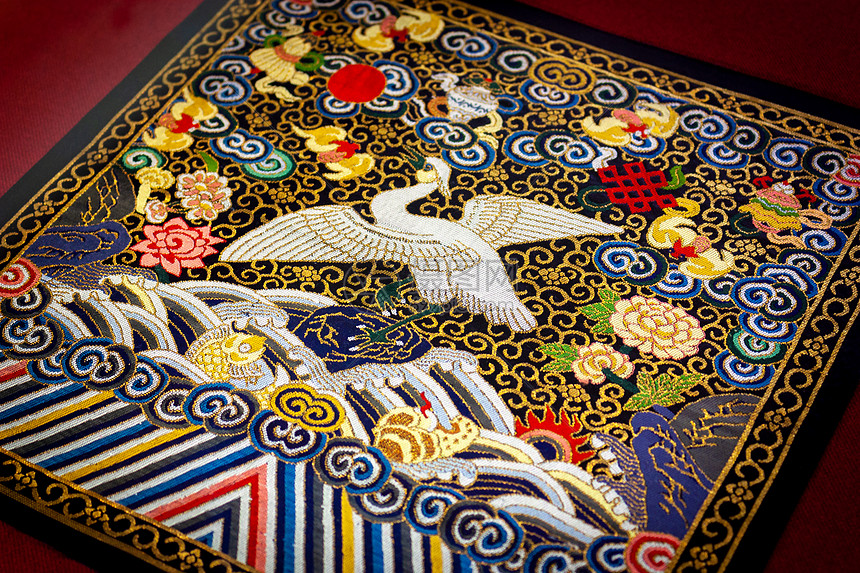
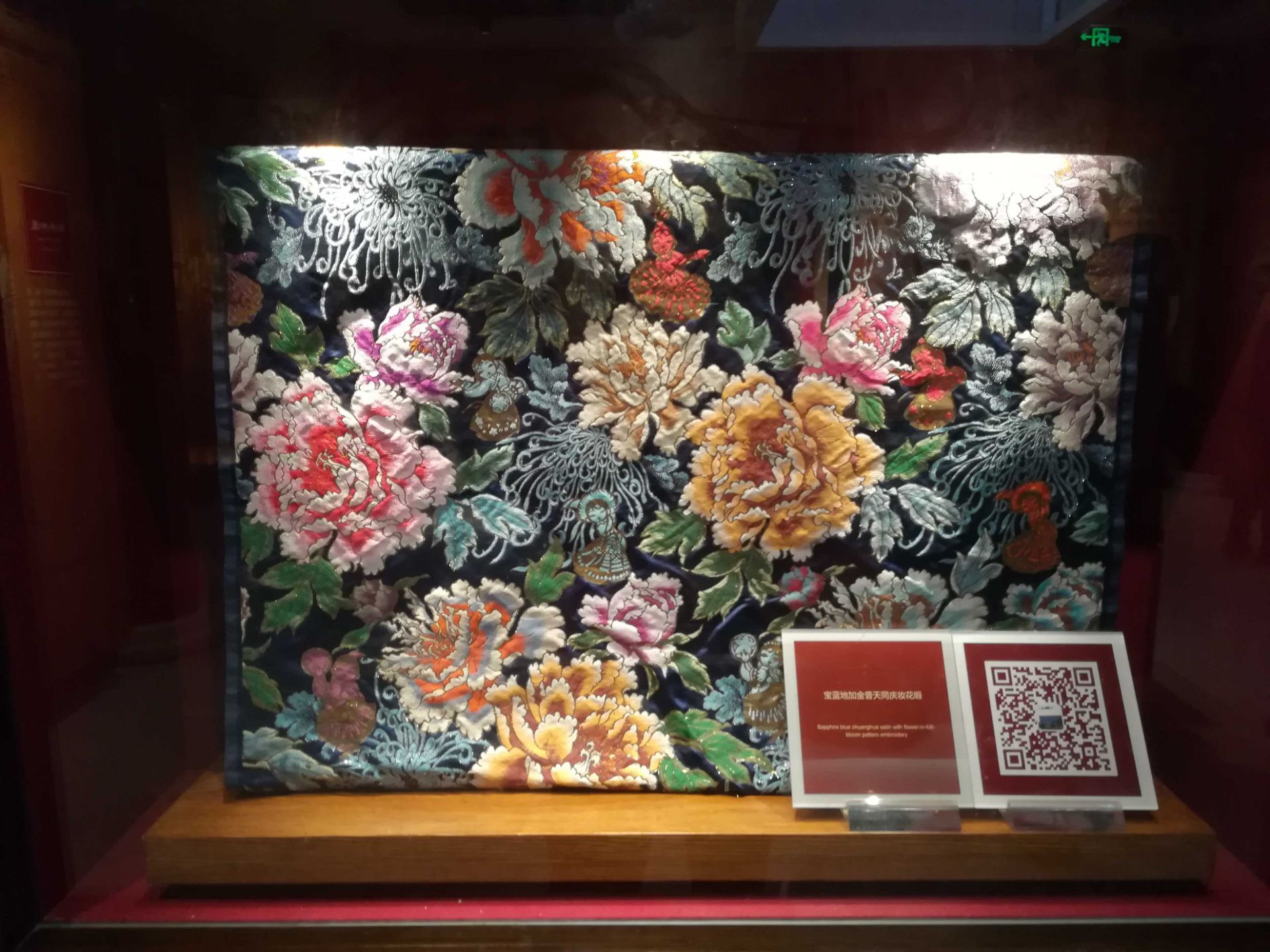
The beauty of Yunjin first blossoms in its breathtaking symphony of materials. Silk forms the warp, gold foil the weft, and peacock feather-twisted threads add accents, creating a luxurious foundation. The most miraculous technique is “Zhuanghua,” a method that allows weavers to freely change colors within the same weft, producing a “shifting palette” effect. Ming Dynasty poets once described the Zhuanghua process as “golden shuttles darting, chasing the moon through colored clouds.” When sunlight grazes the fabric’s surface, the soft luster of silk, the brilliance of gold threads, and the mystical sheen of peacock feathers intertwine, as if weaving dawn and dusk into every inch.
Yunjin patterns are a cultural canon written in silk. From “Four Harmonies of Auspiciousness” to “Eight Buddhist Emblems,” from “Waves and Mountain Peaks” to “Twelve Imperial Symbols,” each design carries profound cultural significance. The “Twelve Symbols” on Ming emperors’ ceremonial robes are particularly intricate: the sun, moon, and stars symbolize light; mountain patterns represent stability; dragon motifs signify authority; and floral creatures embody literary brilliance… Together, these symbols form a microcosm of cosmology and imperial order. Yunjin artisans must not only master weaving techniques but also understand traditional cultural essence to translate these abstract concepts into precise interwoven threads.
In the contemporary era, Nanjing Yunjin is undergoing a magnificent transformation—from an imperial luxury to a public art form. After being inscribed on UNESCO’s Intangible Cultural Heritage list in 2009, Yunjin’s preservation and innovation entered a new phase. Designers are experimenting with integrating Yunjin motifs into modern fashion, where traditional patterns and Western tailoring collide on runways in Paris and Milan. The Nanjing Yunjin Research Institute has developed cultural products that bring this once-exclusive craft into everyday life. Even more inspiring, digital technology is breathing new life into Yunjin—through 3D scanning and virtual weaving systems, traditional patterns are being digitally preserved, while VR devices allow younger generations to experience the joy of “cloud weaving.”
Standing atop the Yunjin Museum by the Qinhuai River, overlooking this city where antiquity and modernity merge, one recalls the words of a septuagenarian Yunjin inheritor: “We weave not just fabric, but time itself.” Nanjing Yunjin is like a flowing textile museum, recording the aesthetic pursuits and artisanal wisdom of Chinese civilization in silk threads. When modern viewers gaze upon these radiant fabrics that have weathered centuries, they are engaging in a cross-temporal dialogue with master craftsmen from a thousand years ago. This conversation will never end, for true beauty is never erased by time—it only shines more brilliantly in new eras.