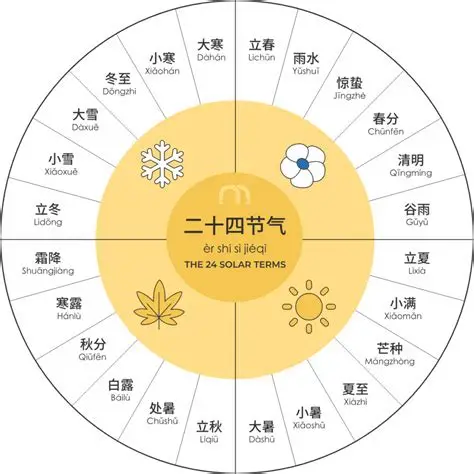
the 24 Solar Terms are a unique and profound knowledge system created by ancient Chinese people, a brilliant example of how humans observe and adapt to nature. For more than 2,000 years, this system has guided the lives of Chinese people—from farming and food to festivals and daily routines—becoming an integral part of Chinese culture and a living link between humanity and the natural world. Often hailed as China’s “Fifth Great Invention,” the 24 Solar Terms are not just a calendar or a set of weather predictions; they are a comprehensive wisdom that reflects the Chinese philosophy of harmony between humans and nature, carrying the accumulated experience and cultural heritage of generations.
The origin of the 24 Solar Terms can be traced back to the Spring and Autumn Period (770-476 BC) and the Warring States Period (475-221 BC), when ancient Chinese astronomers began observing the sun’s position, the changes of seasons, and the growth of plants and animals. They realized that the earth’s revolution around the sun causes regular changes in climate, temperature, and daylight, and they divided the solar year into 24 equal parts based on the sun’s longitude, each lasting about 15 days. This division was officially established during the Han Dynasty (206 BC-220 AD), when the astronomer Deng Ping compiled the “Taichu Calendar,” which clearly defined the 24 Solar Terms and their dates, making them a formal and widely used system.
The 24 Solar Terms are arranged in a specific order, corresponding to the changes of the four seasons: Spring, Summer, Autumn, and Winter. Each term has a distinct name that describes a specific natural phenomenon or seasonal change, making it easy for people to understand and remember. For example, the first term of spring is “Start of Spring” (Lichun), which marks the beginning of spring, when the weather gradually warms up, and plants start to sprout. The second term is “Rain Water” (Yushui), when the rainfall increases, nourishing the soil and promoting the growth of crops. Other spring terms include “Awakening of Insects” (Jingzhe), when hibernating animals wake up, and “Spring Equinox” (Chunfen), when day and night are of equal length.
Summer begins with “Start of Summer” (Lixia), when the temperature rises significantly, and crops enter a period of rapid growth. The middle of summer includes “Grain Buds” (Xiaoman), when grains start to fill but are not yet ripe, and “Grain in Ear” (Mangzhong), when wheat and other grains are ready to be harvested. The hottest period of the year is marked by “Summer Solstice” (Xiazhi), the longest day of the year, followed by “Minor Heat” (Xiaoshu) and “Major Heat” (Dashu), when the temperature reaches its peak, and people take measures to cool down and prevent heatstroke.
Autumn starts with “Start of Autumn” (Liqiu), a signal that the weather will gradually cool down, and the leaves will begin to turn yellow. “End of Heat” (Chushu) marks the end of the hot summer, while “White Dew” (Bailu) brings cool mornings and evenings, with dew forming on grass and leaves. “Autumn Equinox” (Qiufen) is another day when day and night are equal, and “Cold Dew” (Hanlu) and “Frost’s Descent” (Shuangjiang) signal the arrival of colder weather, with frost appearing in some regions.
Winter begins with “Start of Winter” (Lidong), when the temperature drops sharply, and people start to prepare for the cold season. “Minor Snow” (Xiaoxue) and “Major Snow” (Daxue) bring snowfall to northern China, covering the land in white and protecting crops from the cold. “Winter Solstice” (Dongzhi) is the longest night of the year, a time when families gather to eat warm food and celebrate. The final two terms are “Minor Cold” (Xiaohan) and “Major Cold” (Dahan), the coldest period of the year, before the cycle begins again with “Start of Spring.”
In ancient China, farming was the foundation of society, and the 24 Solar Terms played a crucial role in guiding agricultural production. Farmers relied on the terms to decide when to plant seeds, water crops, fertilize the soil, and harvest. For example, “Grain Rain” (Guyu) is the best time to plant rice and other crops, as the rainfall is sufficient to nourish the seeds. “Grain in Ear” (Mangzhong) is the busy harvest season for wheat, and farmers must work day and night to collect the grains before the rain comes. Without the guidance of the 24 Solar Terms, ancient farmers would have struggled to adapt to the changing seasons, and agricultural production would have been greatly affected.
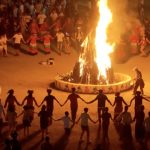
Beyond farming, the 24 Solar Terms are deeply integrated into Chinese folk customs and daily life, influencing people’s food, clothing, and activities. Each term has its own unique customs and food traditions, reflecting the Chinese people’s respect for nature and their pursuit of a balanced life. For example, during “Pure Brightness” (Qingming), people visit their ancestors’ graves to pay their respects, clean the tombs, and offer sacrifices. They also go out for spring outings, enjoying the fresh air and beautiful scenery of spring. During “Winter Solstice,” families in northern China eat dumplings, while those in southern China eat sweet dumplings (tangyuan), a tradition that symbolizes family reunion and warmth.
Food is an important part of the 24 Solar Terms, with each term having its own seasonal ingredients that are not only delicious but also beneficial to health. For example, during “Start of Spring,” people eat spring rolls and radishes to welcome the new season and promote digestion. During “White Dew,” people drink osmanthus wine, which is believed to moisten the lungs and relieve dryness. During “Major Cold,” people eat hot pot and lamb to keep warm and nourish the body. These food traditions are not just about taste; they are based on the principles of traditional Chinese medicine, which emphasizes eating seasonal foods to maintain the balance of the body.
The 24 Solar Terms also reflect the Chinese philosophy of “harmony between humans and nature,” a core concept in Chinese culture. Ancient Chinese people believed that humans are part of nature, and they should live in harmony with the natural world rather than against it. The 24 Solar Terms teach people to observe and respect natural rules, to adapt to seasonal changes, and to live a simple, balanced life. This philosophy has helped Chinese civilization survive and thrive for thousands of years, and it is still relevant today in the era of environmental protection and sustainable development.
In 2016, the 24 Solar Terms were officially listed on the UNESCO Representative List of the Intangible Cultural Heritage of Humanity, gaining international recognition for their cultural and scientific value. Today, even though modern technology has made weather prediction more accurate, the 24 Solar Terms still play an important role in Chinese people’s lives. Farmers still use them to guide agricultural production, especially in rural areas. People still follow the traditional customs and food traditions of each term, keeping the culture alive. In addition, the 24 Solar Terms have become a source of inspiration for art, literature, and design, appearing in poems, paintings, music, and even modern fashion and architecture.
Young people in China are now rediscovering the beauty and wisdom of the 24 Solar Terms. Schools teach students about the terms, their history, and their cultural significance. Social media platforms share knowledge about the 24 Solar Terms, including customs, food, and natural phenomena, making them more accessible to young generations. Many people are also incorporating the principles of the 24 Solar Terms into their daily lives, choosing seasonal foods, adapting their lifestyles to the seasons, and reconnecting with nature.
What makes the 24 Solar Terms so enduring is their practicality, cultural depth, and connection to nature. They are a testament to the wisdom of ancient Chinese people, who observed nature carefully and accumulated experience over generations. In a world that is becoming increasingly disconnected from nature, the 24 Solar Terms remind us of the importance of living in harmony with the natural world, of respecting the rhythm of life, and of preserving our cultural heritage. They are a living treasure that connects the past with the present, carrying the wisdom and traditions of China to the future. Whether it is a farmer planting crops, a family celebrating a festival, or a young person learning about their culture, the 24 Solar Terms continue to be an integral part of Chinese life, shining as a unique symbol of Chinese civilization.